Positive Behaviour Support for adults.
Support that fits real life, real environments, and the people around them.
ABOUT POSITIVE BEHAVIOUR SUPPORT FOR adults
When things feel stuck, we start by understanding why.
Behaviour can affect safety, relationships, independence, work, housing, and participation in everyday life. Sometimes support teams are struggling to respond consistently. Sometimes families are exhausted. Sometimes the person themselves is feeling overwhelmed, misunderstood, or disconnected from the life they want to live.
Positive Behaviour Support looks beyond the behaviour itself to understand what’s driving it. Once the why becomes clearer, the next steps usually do too.
Who this is for.
Adults whose behaviour is creating real challenges in daily life, relationships, work, housing, or community participation. Examples we commonly see include aggression, self-injury, property damage, behaviours that place accommodation at risk, frequent crises, or situations where support teams no longer feel confident about what to do next.
Positive Behaviour Support may be helpful when:

What our work looks like.
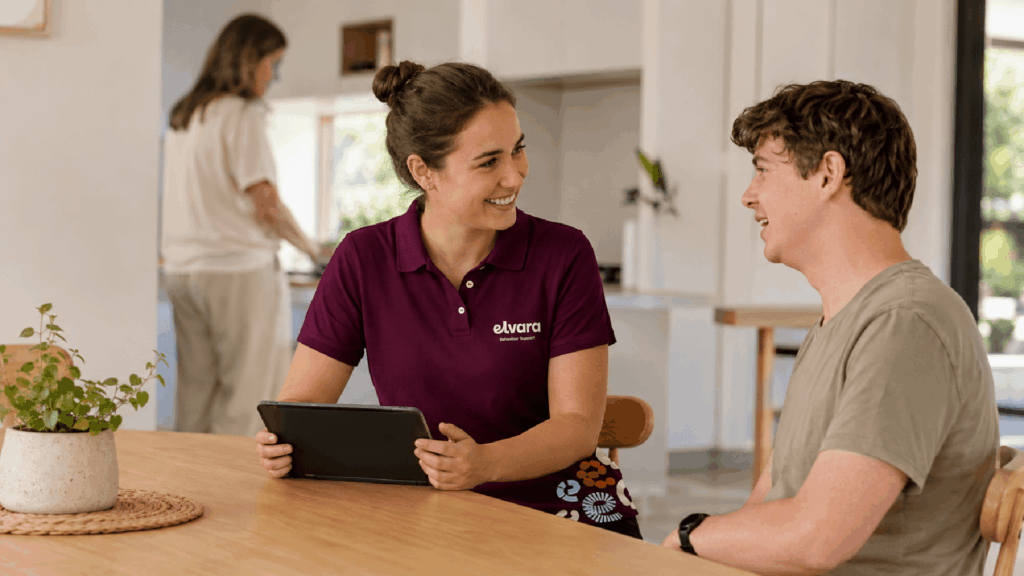
A practitioner spends time with the person (participant) and the people supporting them. That may include family members, support workers, accommodation providers, employers, allied health professionals, or other clinicians involved in their care.
We take the time to understand what’s happening, what may be driving the behaviour, and what is already working. From there, we co-develop a practical plan with the people around the person and work alongside them to put it into practice.
Support may be delivered in the home, workplace, supported accommodation, community settings, or through video appointments. We meet regularly and review the plan every six months, or sooner if circumstances change.
What changes.
For the person: more independence, more choice, more stability, and more opportunities to participate in the life they want to live.
For families and support networks: greater understanding, more confidence, and fewer situations that feel like they are constantly escalating.
For support teams: a clearer understanding of what helps, more consistency in responses, and practical strategies that can be applied day to day.

HOW IT’S PAID FOR
Funding and getting started.
Most Positive Behaviour Support is funded through the NDIS, typically under Capacity Building funding, particularly Improved Relationships.
If you’re not sure whether you have the right funding, or whether Positive Behaviour Support is the right fit, that’s okay. You don’t need to have everything worked out before getting in touch.
A Compass Session can help clarify what’s happening, what support may be appropriate, and what the next steps could look like. It’s a paid, one-hour consultation with an experienced practitioner designed to provide practical guidance and a clearer path forward.
What our clients say
-
“Highly skilled and responsive team who deliver person-centred support that promotes safety, dignity and independence”.
FAQs
Questions we hear.
Yes. Many of the people supported by Elvara live in supported accommodation. Positive Behaviour Support often involves working alongside accommodation providers and support teams to build shared understanding and more consistent responses.
Yes. Positive Behaviour Support works best when the people around a person are involved. With consent, support often includes families, support workers, accommodation providers, allied health professionals, and other clinicians.